
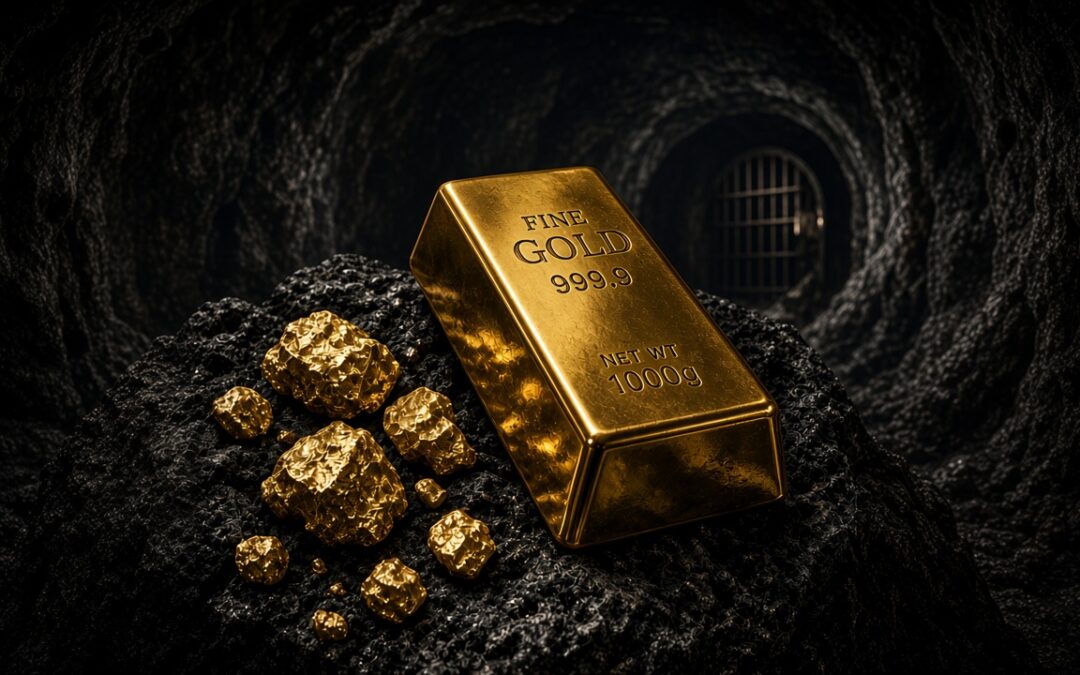
I read a bitcoin advocate make the same tired statement to the effect that gold isn’t scarce because they’re still mining it while you can’t make more bitcoin. Argument with bitcoin maximalists is pointless. In terms of convincing them to think about things differently, it is comparable to arguing with flat earthers: same chance of changing their mind (zero) but it is less entertaining.
But I digress.
There is a lot wrong with the notion that gold isn’t scarce because they’re still mining it while you can’t make more bitcoin. The biggest reason is that the person who wrote this is using an incorrect definition of scarcity. Scarcity is not merely physical rarity or even a fixed quantity. Austrian economists define scarcity as the condition in which available means are insufficient to satisfy all the ends people would like to pursue. Something can be abundant but economically scarce if there is not enough to meet all human desires. A good is scarce when people value it and cannot obtain unlimited amounts of it at zero cost. Take commodities like corn or soybeans. Drive through the midwest in August, their are fields and fields of it, it is literally growing out the ground. But despite millions of acres of corn and soybeans these commodities are still scarce. Gold is much more rare than corn and soybeans. So even if more gold was being created and even though gold is being mined it is still scarce because there isn’t enough to satisfy all human desires.
Another reason why this attitude is wrong is that for all practical purposes no additional gold is being created either. No one knows exactly how much gold is on earth, either above or below ground, but it is a fixed amount. Yes, more gold is being mined, but the amount of gold that exists on earth (or solar system if you want to bring up asteroid mining) is essentially fixed.
Asteroids containing gold have and do hit the earth but at such a rare and insignificant volume to be irrelevant.
If you want to bring up asteroid mining, which will not be economically viable for generations, if ever, then I would just respond that the amount of gold in the entire universe is in fact fixed. Perhaps more is being created in a very rare and destructive processes such as neutron stars colliding or supernovas but that is irrelevant for any pragmatic discussion. Just like bitcoin the amount of gold accessible to humans is fixed, but unlike bitcoin we don’t know exactly what that fixed quantity of gold is.
The total quantity of bitcoin is fixed mathematically at 21 million, but more bitcoin is also being mined up to that fixed 21 million limit. So an appropriate comparison between both bitcoin and gold is that more bitcoin is being mined up to the 21 million limit and more gold is being mined up to the (unknown) fixed quantity of gold on earth.
A final argument, one I’m not fully on board with, but worth considering, is that bitcoin is in a real sense not limited to 21 million coins either. I will defer to the mathematicians that the number of bitcoins is limited to 21 million on the bitcoin network, which is the biggest by dollar value, and has the most name recognition. However, there are hundreds and hundreds of other cryptocurrencies that have been or could be created. One could eventually surpass the bitcoin network. So while there will only ever be 21 million bitcoin, there are many other Cryptocurrencies. I think there is real opportunity for a cryptocurrency better than bitcoin that could be used as a currency, rather a vehicle for speculation.
Not only that, but limited supply by itself doesn’t make something scarce. To be scarce something needs to be limited in supply (not even fixed but limited) AND desirable. If tomorrow everyone woke up and no longer wanted gold, it would no longer be scarce. Similarly, if everyone work up tomorrow and decided they didn’t value any of the 21 million bitcoin that do or will exist, bitcoin would not be scarce either. I don’t think either one of these are likely, but I do think that decades from now, it is possible that bitcoin won’t be desired anymore than say vintage fax machines are desired. I am very confident that 50 years from now gold will still be valued, I am less certain that 50 years from now bitcoin will still be valued.
Bitcoin is really bad at day to day transactions and isn’t used in this way. It takes 10-30 minutes to confirm a transaction and transactions aren’t cheap (ranging from $3-$5 when the network isn’t congested). There are also tax and price fluctuation considerations, while not insurmountable, are inconvenient. Imagine buying a $10 coffee, paying a $3 fee, and waiting 30 minutes before you pick it up and paying capital gains taxes on the transaction. I’m not saying gold is better than this (although some states do have legal tender laws that include gold), but bitcoin is not an improvement over credit card networks for day to day transactions.
Bitcoin proponents can point to the lighting network, but in this case you’re using technology sitting on top of bitcoin, not bitcoin itself and it solves some but not all of the problems stated above and adoption remains low. A big argument proponents make for bitcoin is that it is digital gold and makes transactions easier, but it isn’t really used for day to day transactions.
An electronic “store of value” (Austrian economists forgive my loose usage of this phrase) like bitcoin does have benefits over Gold (and some disadvantages) for transactions. However bitcoin has some weaknesses another network could capitalize on. Admittedly, no other network has come close to unseating king bitcoin and I don’t think any will any time soon.
As always, the nice thing about bitcoin and Gold is that you can choose to own both.